MEDIA
· CIVILIZATION
· ARTS
A Vitrohype Manifesto on Power, Technology,
and Human Memory
I. The Familiar Road
Humanity walks a familiar road, scorched twice
by world wars and now shadowed by a third that
may not wear a uniform. This war moves through
markets, media, machines, algorithms, debt,
patents, and fear. Each catastrophe promises
wisdom, yet power relearns dominance faster than
peace, and technology sharpens its teeth faster
than conscience.
Memory fades. Empathy thins. “Never again”
quietly becomes “not this time—yet.” Vast
interconnected systems—industry, military,
finance, media, and medicine—grow efficient,
concentrated, and powerful, while humanity grows
fragmented and distant from the cost paid at
ground level. Progress counts structures, but
ignores souls.

The lesson remains simple: peace is always
cheaper than war—but only for those willing to
choose it before interest accumulates. History
does not trap us in repetition; we trap
ourselves by refusing reflection.
II. Technology Without Wisdom
The world wars of the past were fueled by
industrial and nuclear advances. A third—literal
or symbolic—would be driven by digital,
autonomous, and informational weapons. The
pattern remains unchanged: technology evolves;
responsibility does not. We become more
efficient at destruction without becoming wiser
in restraint. Tools turn into masters. Systems
optimize for power while ethics lag behind.
III. Memory That Fades Too Fast
Societies commemorate tragedy, but collective
memory is short-lived. As generations shift,
emotional lessons dissolve into abstraction.
What begins as “Never forget” becomes “Never
happened to us.”
Without living memory, prevention weakens.
Without reflection, progress becomes repetition.
IV. The Failure of Empathy
Conflict reignites when people see opponents
instead of fellow humans—different nations,
beliefs, classes, or economic interests. The
inability to imagine another’s suffering removes
the steering wheel from history.
If humanity has passed through three world
wars—literal or symbolic—the bleak truth is not
that history repeats itself, but that we repeat
ourselves. Peace means nothing without empathy.
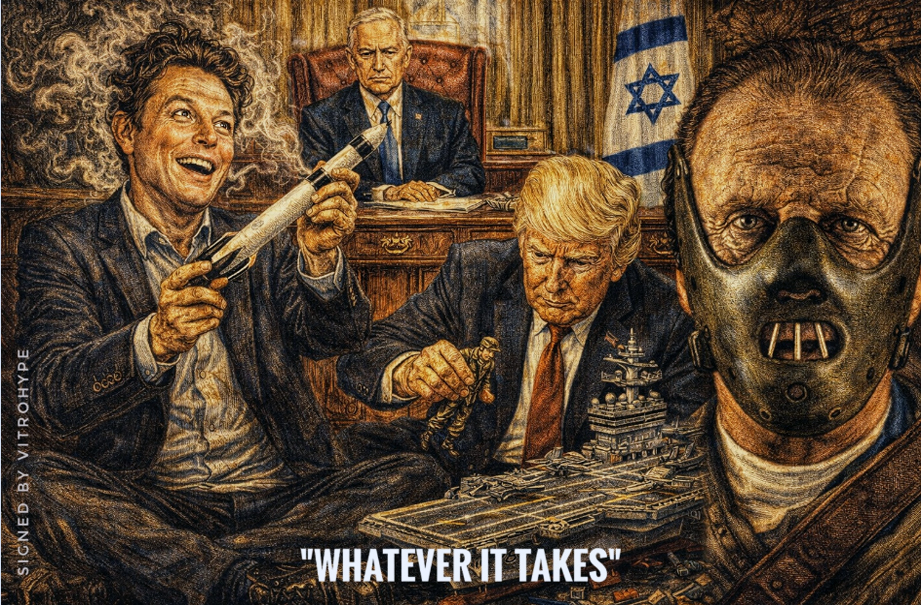
V. Peace Is Cheaper (A Parable)
When the last cannon fell silent, the village of
Roofheim heard the wind again. Soldiers had
fought for a hill that meant nothing to those
below it.
An old baker placed a single loaf of bread
before the generals.
“This loaf cost me my apprentice, my wife’s
sleep, my neighbors, and the empty chairs at our
tables. You will rebuild the houses—but who will
rebuild the fatherless home?”
Then he said the words that echoed through the
valley: “Peace is always cheaper than war. War
charges interest.” Peace does not need to be
negotiated by generals. It must be chosen—again
and again—by everyone who knows what it costs to
lose it.
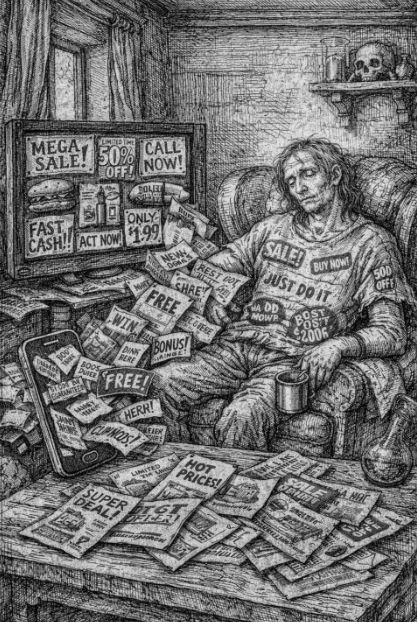
VI. Vitrohype: An Open Laboratory
The process is not hidden—it is revealed.
Mistakes, drafts, failures, and revisions are
part of the lesson. Vitrohype rejects the myth
of the flawless masterpiece.
The laboratory remains open
The code stays visible
The structure is accessible
Knowledge is replicable
Transparency is not weakness—it is resistance.

VII. Freedom Beyond Permission
A free artist asks no one for approval—not from
institutions, industries, or algorithms.
Vitrohype creates beyond metrics and trends.
Platforms may carry the message, but they must
never own it. The digital world is a canvas, not
a cage. Teaching flows in all directions.
Everyone who creates becomes part of the chorus.
VIII. Sharing as Rebellion
The more you share, the freer you become.
Knowledge is given not as charity, but as
rebellion.
A culture that shares cannot be controlled. The
greatest empire is the marketplace. The greatest
rebellion is independence. Vitrohype resists the
reduction of creativity into currency, thought
into data, and humanity into metrics.

IX. Structural Power: Five Interlinked Sectors
Overview: Five sectors—industry, military,
pharmaceuticals, media, and banking—have become
increasingly concentrated, interdependent, and
politically influential. Efficiency and scale
bring benefits, but also systemic risk.
Industrial & Manufacturing Sector
Role: Capital goods, infrastructure, logistics,
energy, aerospace, semiconductors.
Trends:
Supply-chain reshoring
Rising capital intensity
Deepening links to defense and digital platforms
Risks:
Lock-in of proprietary standards
Political leverage over governments and labor
Single-point dependencies
Military–Industrial Complex (MIC)
Structure: Armed forces, security bureaucracies,
defense contractors, political actors.
Dynamics:
Long-term procurement as implicit subsidy
Revolving doors between state and industry
Civil–military tech convergence (AI, cloud,
satellites)
Risks:
Militarized policy agendas
Opaque contracting
Escalation incentives aligned with profit
Pharmaceutical Sector
Structure: Global Big Pharma + smaller biotech
firms.
Trends:
M&A-driven growth
Acquisition of late-stage pipelines
Risks:
Pricing power over essential medicines
Reduced competition in key therapeutic areas
Public-health access vulnerabilities

Media Conglomerates & Information Control
Structure: Concentrated ownership of content,
distribution, and platforms.
Dynamics:
Vertical integration (content + streaming)
Algorithmic gatekeeping
Risks:
Narrative capture
Echo chambers
Cultural and political agenda-setting power
Banking & Finance
Structure: Highly concentrated global banks +
growing non-bank financial intermediaries.
Roles:
Financing M&A across all sectors
Funding defense, media, and pharmaceutical
consolidation
Risks:
Too-big-to-fail fragility
Cross-border contagion
Opaque financial structures
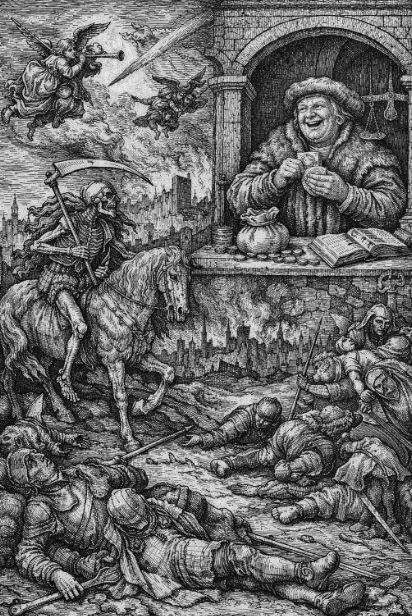
X. Cross-Sector Dynamics
Finance funds consolidation across industry,
pharma, media, and defense
Technology flows blur civilian and military
boundaries
Political economy capture shapes regulation,
procurement, and antitrust enforcement
Concentration amplifies power while
externalizing public cost.
XI. Principal Systemic Risks
Political capture and regulatory failure
Fragility through concentration
Information and narrative control
Public-health access and pricing risks
XII. Practical Recommendations
For Policymakers & Regulators
Strengthen merger review beyond price effects
Enforce procurement transparency
Regulate revolving doors
Stress-test financial concentration exposure
For Civil Society & Researchers
Track cross-ownership and influence networks
Publish accessible public datasets
Promote public alternatives in essential sectors
XIII. Closing Reflection
“Society must be organized so that love—man’s
social and humane nature—is not separated from
existence itself. Any society that excludes the
development of love will perish by its own
contradiction.”
Progress without reflection is hollow.
Technology without empathy is dangerous.
Peace is cheaper. But only if chosen early.
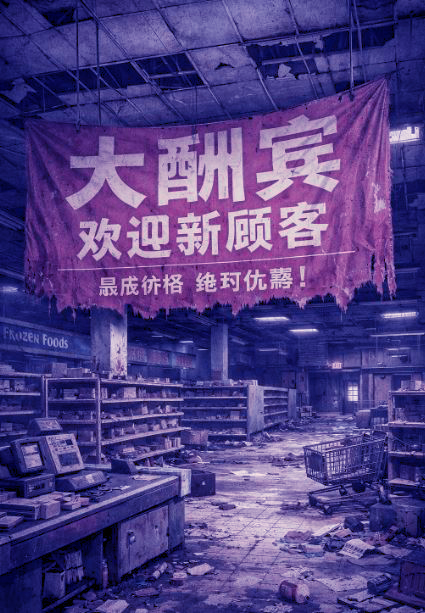
China as a Role Model for the
Global Economy”and a Mirror for Western Cost Models.
Over the past four decades, China has transformed
itself from a largely agrarian society into one of
the world most influential economic powers. This
transformation has made China both a role model and
a point of friction for the global economy,
especially when compared to the cost models dominant
in Western nations.
Chinas economic strength lies in its long-term
planning, state coordination, and ability to
mobilize resources at scale. Large infrastructure
projects, industrial clusters, and strategic
investments in sectors such as renewable energy,
semiconductors, and artificial intelligence have
been pursued with continuity across political
cycles. This stability allows companies to operate
within predictable frameworks, reducing uncertainty
and lowering overall production costs. As a result,
China has become indispensable in global supply
chains.
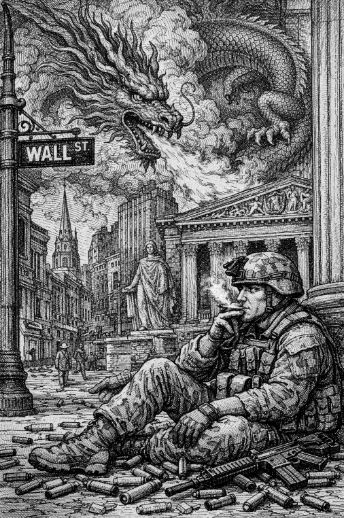
In contrast, Western economies are shaped by higher
labor costs, complex regulatory environments, and
fragmented decision-making processes. Social
security systems, environmental standards, and legal
compliance raise production costs but also reflect
societal choices: worker protection, environmental
responsibility, and individual rights. These costs
are often perceived as disadvantages in global
competition, yet they underpin social cohesion and
long-term sustainability.
China challenges Western cost models by
demonstrating how efficiency, scale, and state
involvement can dramatically reduce unit costs and
accelerate innovation. However, this model also
raises questions about transparency, market access,
and the balance between economic growth and
individual freedoms. Western economies, while more
expensive, often excel in creativity, brand value,
and high-end innovation driven by open markets and
institutional trust.
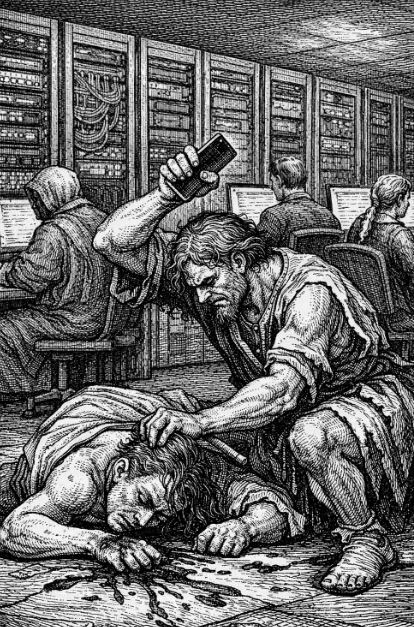
Rather than viewing China solely as a competitor,
the global economy may benefit from selective
learning on both sides. Chinas capacity for
long-term investment and industrial strategy can
inspire Western reforms, while Western cost models
highlight the importance of social and ethical
boundaries. The future global economy will likely
depend on hybrid approaches that combine efficiency
with responsibility.