
VITROHYPE.NET
Human Dignity Shouldn’t Be Used as a Political Weapon.
Introduction: The Moral Weight of Dignity
Human dignity is one of the most powerful moral ideas humanity has ever articulated. It affirms that every person possesses inherent worth—independent of usefulness, productivity, nationality, belief, or social status. Because of this universality, dignity functions as a moral baseline for political and social life. Precisely for that reason, it requires careful protection. When human dignity is instrumentalized as a political weapon, it loses its ethical depth and becomes a tool of exclusion, manipulation, and power.
Social Reality and the Risk of Moral Abstraction
In Germany, the warning signs of a social crisis are increasingly visible. Rising poverty and inequality, a deepening housing crisis marked by evictions and housing insecurity, and persistent educational disadvantage have led many social organizations to speak of a looming "social catastrophe." Vulnerable groups—children, elderly people, single parents, and those on low incomes—are disproportionately affected by inflation and the chronic lack of affordable housing.

These realities demand political responses grounded in solidarity and structural reform. Yet when debates about social policy rely too heavily on abstract moral language, especially invocations of dignity without material commitment, they risk becoming disconnected from lived experience. Human dignity is not preserved through declarations alone; it is upheld through concrete conditions that allow people to live without fear, humiliation, or exclusion.
Dignity as Rhetorical High Ground
In political debates, appeals to human dignity are often treated as morally unquestionable. Those who claim to act "in the name of dignity" place themselves on elevated moral ground, while critics are implicitly framed as immoral or inhumane. This dynamic does not enrich democratic discourse—it shuts it down. Rather than encouraging ethical reflection, dignity becomes a rhetorical shield. It blocks criticism, simplifies disagreement into moral failure, and silences plural perspectives. A concept meant to unite humanity is reduced to a tool for winning arguments.

Selective Dignity Is No Dignity at All
The core problem is not dignity itself, but its selective application. Political actors may passionately defend the dignity of certain groups while denying it—explicitly or implicitly—to others. Migrants, the unemployed, the sick, and political minorities are frequently excluded from the same moral concern that dignity supposedly guarantees for everyone.
Once dignity is granted conditionally—based on conformity, usefulness, productivity, or loyalty—it ceases to be dignity. True dignity cannot be earned, revoked, or rationed. It either applies universally, or it becomes an instrument of power.
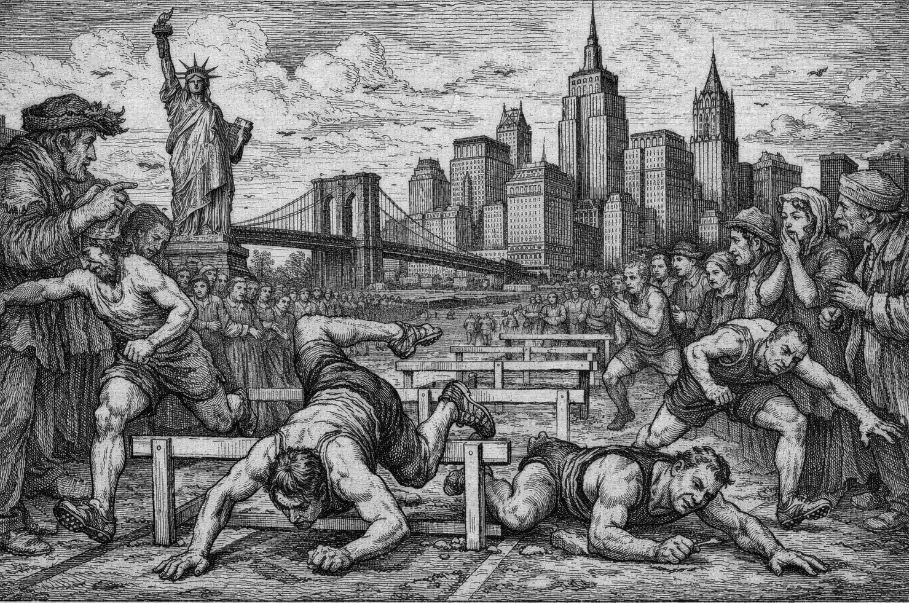
Militarization, Security, and Competing Moral Claims
This tension becomes visible in broader strategic debates as well. Germany’s current political trajectory includes a major military buildup, framed as a historical turning point. Massive investments in weapons systems, advanced technology, and expanded military capacity are justified as necessary responses to external threats and as obligations to protect democratic values.
Such debates often invoke dignity implicitly: the dignity of the nation, of security, of defending freedom. Yet when moral language is mobilized to prioritize military strength while social infrastructure erodes, a difficult question arises: whose dignity is being protected, and at what cost? A society that speaks loudly about dignity abroad while neglecting it at home risks hollowing out the very values it claims to defend.

The Danger of Moral Simplification
Using human dignity as a political weapon also flattens complex social problems. Economic inequality, healthcare access, freedom of expression, and technological change require evidence-based policy, openness to disagreement, and sustained democratic negotiation. When these issues are framed as moral absolutes, emotional pressure replaces dialogue.
Moral language becomes a shortcut to authority rather than a guide to justice. In this climate, disagreement is no longer a democratic necessity but a moral offense.
When Dignity Is Turned Against Freedom
There is a further danger: once dignity is politicized, it can be turned against individual autonomy. Policies may be justified as "protecting dignity" while in practice restricting self-determination, speech, or personal choice. In such cases, dignity no longer means respecting people as subjects of their own lives, but enforcing a particular moral vision upon them.
As William S. Burroughs warned in a different context, a consumer society tends toward simplifying and degrading both the product and the person. Political systems risk a similar degradation when human beings are reduced to moral symbols rather than treated as complex, autonomous individuals.
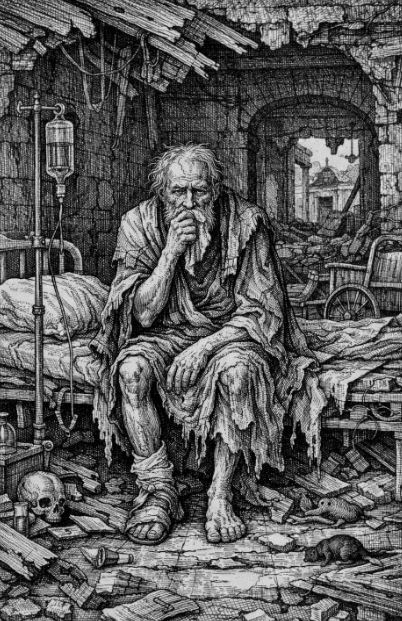
Reclaiming Human Dignity
To genuinely honor human dignity, it must remain a shared ethical foundation—not a partisan instrument. Dignity should establish minimum standards for how people are treated, not maximum limits on how they are allowed to live, think, or dissent.
Respecting dignity means tolerating disagreement, protecting minority rights, and resisting the temptation of moral superiority. It requires consistency rather than spectacle, universality rather than selectivity.
Conclusion: Dignity as Principle, Not a Weapon
Human dignity works best when it is quiet, consistent, and universal—not loud, strategic, and exclusionary. When it stops being used as a weapon and returns to being a principle, it can once again fulfill its true purpose: reminding us that every human being matters, especially when politics becomes difficult.
© Vitrohype / Heyo Wurch
vitrohype.net Digital and Analogue Arts, Video, Programming,
Music and Graphics... Postadress / Imprint: Germany
Nienburgerstr. 56 - 31638 Stöckse ~ For donations
please use the German Post Giro IBAN DE42 3601 00430495 5544
35 Germany.